



DESIGNED FOR GOOD, BRANDED FOR LIFE.

This week at the University of Bolton Arthur Parsons from TT games gave a lecture, heavily involving insights into techniques of game design. Due to Arthur Parsons’s background in Lego branded games he mentioned each Lego game starts with five key pillars. Humour, Authenticity, Co-op, Customization and Trusted (which relates to value for money).
Delving into each one of these pillars, each adds to the brand recognition of Lego games. For example, everyone who picks up a game which starts ‘Lego’ (example: Lego Lord of The Rings, Lego Star Wars, etc) can expect the five pillars within the game, thus allowing potential players to know what kind of experience they are to attain from their purchase.
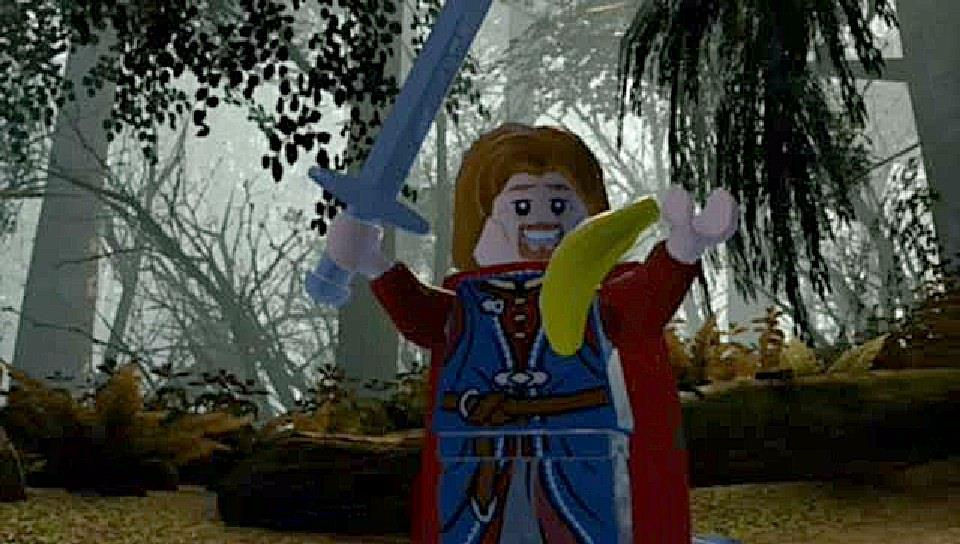
Firstly, each Lego game is ingrained throughout with humour. Humour helps both add content to the game and also direct the game at a target audience (children of around 6 to 10 with a secondary audience of whichever IP the game is using e.g. Star Wars fans). The content humour adds within Lego games could be exemplified by a scene from Lego Lord of the Rings, changed from the cinematic Lord of the Rings version to have a cheeky or unexpected twist, often with the intention to add humour and make the scene whimsical.
Picture: http://imgur.com/gallery/bGgAuxX
Next, the second pillar being authenticity, is a key aspect for all work with predetermined IPs with history. As seen with the Marvel based Lego games, authenticity shines through different aspects such as in-depth character representations and their skill set. Arthur Parsons mentioned that there is a character mechanics role at TT that one person works solely to make each character unique and set to authentic aspects directly from the comics.
Another pillar being Co-op within the Lego games or more precisely ‘couch co-op’, is a feature many games in modern game development do not include in their software. This gives the Lego branded games a USP, giving children and other players of the software an extra way to play the games that many other games do not. This is attractive to parents buying a game for multiple children in the same household. This aspect was key to the Mirror picking two lego games in its 'Most Important Family Video Games of 2017' list (Robertson, 2017), with both descriptions of the games putting this feature to the fore of reasons why families who game together should buy them.
Looking further, the next Pillar is customisation. This is embedded throughout many recent Lego games, one such that stands out is Lego Marvel Super Heroes where the player can make their own ‘super hero’ mixing and matching abilities from other ‘real’ super heroes in the game. The customisation aspect increases replay ability of most games and gives players a way to express themselves upon the software (White, 2014). Brittany White argues that games with customisation allow players to project themselves into the game. Games such as Lego Marvel Super Heroes (Travellers Tales, 2013) allow the player to build their own hero, choosing traits such as rocket flight, bow and arrow weapons and more! Basically creating their own alter ego to play within the game, the possibilities alone increase replay-ability of the game.
Finally the last pillar is ‘trusted’ which relates directly to being able to trust the product on being a value for money. Arthur Parson’s mentioned that each Lego game is designed to be around 10 hours for the main story, which takes from the trusted pillar of allowing people deciding to purchase one of the games to know the amount of time they can be playing for.
References:
Robertson, A. (2017, February 3rd). Most important family video games of 2017 - from LEGO Worlds to Legend of Zelda. Retrieved from Mirror: http://www.mirror.co.uk/tech/most-important-family-video-games-9750409 [accessed on 10/3/17]
Travellers Tales. (2013, October 22nd). Lego Marvel Super Heroes. [Xbox 360 Video Game Software] Burbank, California, United States: Warner Brothers Interactive Entertainment.
White, B. (2014, April 9th). Why are games with a customizable main character so popular? Retrieved from Media Diversified : https://mediadiversified.org/2014/04/09/why-are-games-with-a-customisable-main-character-so-popular/ [accessed on 12/3/17]
Comments